by | Feb 5, 2024 | Karen's Korner
An article in The Light of Truth vol. 13, no. 4, 1893 wrote that Jennie Bennitt Hagan Jackson was born in Lowell, Massachusetts in 1860. Her father passed away when she was only ten months old. Mrs. Janet Hagans’s sister, Jane Hoyt, came to live with them and the women purchased a small cottage in South Royalton, Vermont. During the winter of 1863-64, Jennie began showing signs of mediumistic ability. All her relatives were Spiritualists, including her mother and aunt who were mediums.
Jennie said that “she felt when spirit hands touched and caressed her, what she heard when they laughed in her company, and many other things of interest. At four years of age, she saw and heard much, but was so weak and frail they dared not urge her development on either spirit or mortal side.”
Once in school, she began to see spirits, including Dr. Hoyt, her father, and Mr. Jasper Arren, an Englishman. Hoyt promised that Jennie would “never want for the comforts of life” but her health remained poor. Her mother and aunt sat in a silent circle on Thursday nights, hoping to heal her and aid in her development. When she was 11, she had a hemorrhage in her lungs and her family feared the worst would happen. The spirits were protecting her and she recovered before they moved to Nebraska in 1873. There she regained her health and attended school. She gave her first public lecture when she was 13 in Arlington, Nebraska.
Jennie continued to lecture while in trance and gave impromptu poems on subjects given to her by the audience. In 1875, she travelled to Wisconsin and Ohio where she had relatives. She lectured almost every night. She was also involved in the temperance movement. In 1876, she returned to Vermont with her mother. She attended school while going to adjoining towns to lecture.
In 1887, she joined the Lake Pleasant Camp meeting for the first time. Other camp meetings followed, and she travelled as far west as Missouri and Iowa, and even went to Canada. In 1891 at the Lily Dale camp meeting, she was married to Bradford D. Jackson of Grand Rapids Michigan.
Jackson was born in Sullivan, Ohio and was a landscape and scenic view photographer who began his career taking portraits in Grand Rapids, Michigan. “A vast audience took part in the ceremony, and all joined in good will, love, and harmony toward the newly wedded pair.” They lived in Grand Rapids with Jennie’s mother. “Mrs. Jennie B. Hagan Jackson is continuing her work, and her husband is a great aid to her, whose profession is that of an artist and photographer. There new line is in connection with a stereopticon and finely illustrated lectures from photographic views which Mr. Jackson makes.” They were putting together a book of views of various Spiritist camp meetings. An album still exists that contains photos taken at four camps: Onset Bay Grove (Wareham, MA), Lake Pleasant (Montague, MA), Nickerson’s Grove (Harwich, MA) and Queen City Park (South Burlington, VT).
By 1898, Jennie was a Spiritualist leader in Fort Worth Texas, building a spiritual center. Attendance was large and prospering. Bradford filed for divorce in 1899, citing “cruelty and desertion” as the cause. Jennie quickly married Horace Daniel Brown, a traveling salesman, the following year. They maintained an inn. The same year, Jennie attended the International Jubilee at the Golden Jubilee Celebration of Spiritualism in Rochester, New York. Jennie and Cora L. V. Richmond gave impromptu poems from a subject given by the audience, including “The Sinking and Rising of the Maine”, and for an encore “Mountain and Valley.”
Jennie died in 1907 in El Campo, Texas while still in charge of a parish. The Randolf Vermont Herald and News, February 7, 1907, wrote, “At an early age Mrs. Brown developed a marvelous intuitive faculty of mind, empowering her to deliver a strong and well composed poem, upon any subject given her without premeditation or hesitation and always very gracefully. In later years she commenced to lecture and preach and had become noted as an interesting speaker.” Jennie got blood poisoning from an injured knee and died a few days the injury, leaving a “fine estate and beautiful home.” Horace Brown died a decade later.

by | Jan 29, 2024 | Karen's Korner
Benjamin B. Hill was born to Benjamin and Rebecca Hill in 1830 in Middlesex, Massachusetts. His first marriage was to Sarah A. Steele in 1850. They had five children while Hill worked as a machinist in Chicopee, Massachusetts. He was successful in his trade, and holder of roughly 75 patents related to the stamp trade. By 1867 he was a manufacturer of Seal Presses in Springfield, Massachusetts and his travels took him as far west as California. He formed the B. B. Hill Manufacturing Company in 1880, which employed 18 skilled workers.
Hill’s life was not without tragedy. In 1875, his youngest daughter, Sarah, died at the age of 15. He and his wife divorced soon afterward. By 1880 he had married his second wife, Nellie E. Channing who had also been married before to a man named Stafford. The Hills moved to Philadelphia about 1882 when he relocated his business there. They traveled to Europe at least twice.
Hill’s interest in Spiritualism began before the death of his daughter. He was a delegate to the National Spiritualists Convention as early as 1873 and a well-respected early pioneer of the spiritualist movement in the United States. He was also active in the Camp Meeting Association in Maine. An 1881 newspaper account stated that “Dr. Abbie E Cutter on her travels spent a few weeks at the home of B. B. Hill and his wife in Springfield, Mass. Mrs. Hill who was formerly a public medium, is doing a great deal for the cause of Spiritualism. A great interest has been awakened in Springfield by the book of Samuel Bowles.”
At some point, they adopted Mercy C. Cadwallader as their daughter. In the 1890s, Cadwallader lived in Philadelphia where she worked for the Oriental Publishing Company. She was involved with the publishing of Antiquity Unveiled by J. M. Roberts. It was here that Cadwallader became interested in Spiritualism. Cadwallader joined the National Spiritualist Association (NSA) which was organized in 1893, and in 1894 she was elected honorary Vice-President. Unfortunately, Nellie died in 1898 of “fatty degeneration of the heart” and Hill remained a widower the remainder of his life.
Hill sponsored the publication of the book by Boston Banner of Light Publishing Co., The Christ Question Settled or Jesus, Man Medium, Martyr. written by J. M. Peebles in 1899. Hill said of Peebles book: “Now we come to those historical characters to which Dr. Peebles in his book refers to as witnesses to prove the authenticity of the historical Jesus. He and others point to the mutilated histories of these celebrated characters for proof, but they now speak to us off-hand from spirit life. This I consider direct testimony; therefore, it should take precedence of all book testimony that has been manipulated by priestcraft.”
Hill died in 1913 at the age of 83 while living in Chicago with Mercy C. Cadwallader and her husband. Services were held at the Temple of the First Association of Spiritualists of Philadelphia on July 12th 1913. In his will, he stipulated that he would be buried at Northwood Cemetery, in a plot that he bequeathed to Cadwallader.
by | Aug 21, 2023 | Karen's Korner
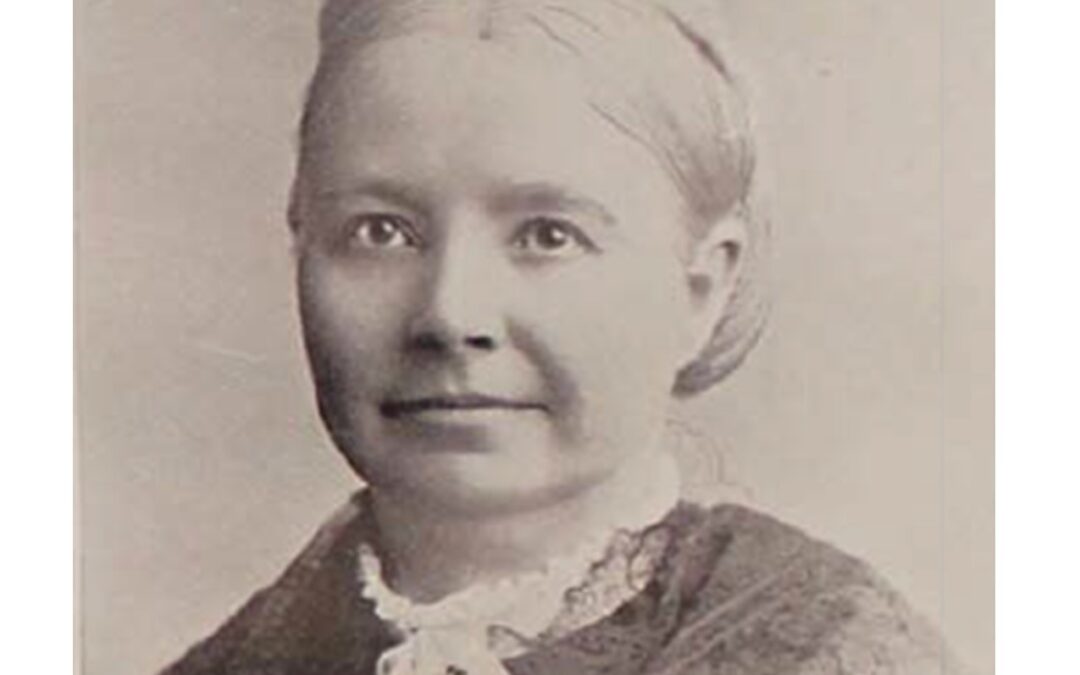
Abby A. Judson was born in 1835 in Myanmar (Burma) to Rev. Dr. Adoniram and Sarah Hall Judson, both Baptist missionaries at the time. In 1841, one of her younger brothers, Henry, passed while they were on a trip to India. That was followed by the death of her mother in 1845 while hey were in the harbor of St. Helena, USA. Her father remarried and the family returned to Burma, where her father died in 1850.
Abby was educated at several private schools along the east coast of the United States. She worked as a governess and then teacher in New England from 1853-1879. After a year traveling in Europe, she founded the Judson Female Institute in Minneapolis in 1879. After becoming a Spiritualist in 1887, she closed her seminary and began giving private lessons and devoting herself to Spiritualism.
In 1890, after attending a camp meeting in Clinton, Iowa, she was inspired to create a new Spiritual association in Minneapolis. Since she wasn’t a medium or healer, the group decided she would be the one to educate the public with informational writings and lectures. She described her process of writing in Why She Became a Spiritualist: Twelve Lectures. “On these two afternoons, when ready to write, she deadened her door-bell, darkened her study with close curtains, ‘entered her closet and shut to’ the curtain, and there played on her organ in the dark, until she saw waves of magnetic light, resembling the aurora borealis shimmering over the Arctic sky. Shen then went to her desk, raised the curtain just enough for her to see to write, and then wrote notes, words and sometimes whole sentences, without conscious effort.”
By 1891, Abby was speaking in public. A dozen of her lectures and her biography were published in the book, Why She Became a Spiritualist: Twelve Lectures (1895). Other books included: The Bridge Between Two Worlds (1894), Development of Mediumship by Terrestrial Magnetism, and From Night to Morn; or an Appeal to the Baptist Church. Her lectures included topics such as: What is Spiritualism, Do Spiritualists Believe in God, Personal Evidences of Spiritualism, Unreasonable Dogmas, and What is Death.
She compared Spiritualism to other religions in Why She Became a Spiritualist: Twelve Lectures, saying: “All these religions have their limitations. These limitations arise from narrowness of doctrine; from a servile deference to one man, its founder; or from race restrictions. Spiritualism, on the other hand, is utterly comprehensive. It is a cult, or rather a knowledge, that reaches all men in all conditions, in all countries, and in all ages of the world. Yes, it goes beyond this physical world, and embraces in its divine sway, all spirits out of the body, and all spirits in all the universe.”
Abby died a tragic death when a lamp accidently overturned next to her bed while she was reading. Some of the burning oil fell on the bed and ignited her clothes. She ran from the house but died from her burns in December of 1902 in Arlington, New Jersey.
by | Jul 28, 2023 | Karen's Korner
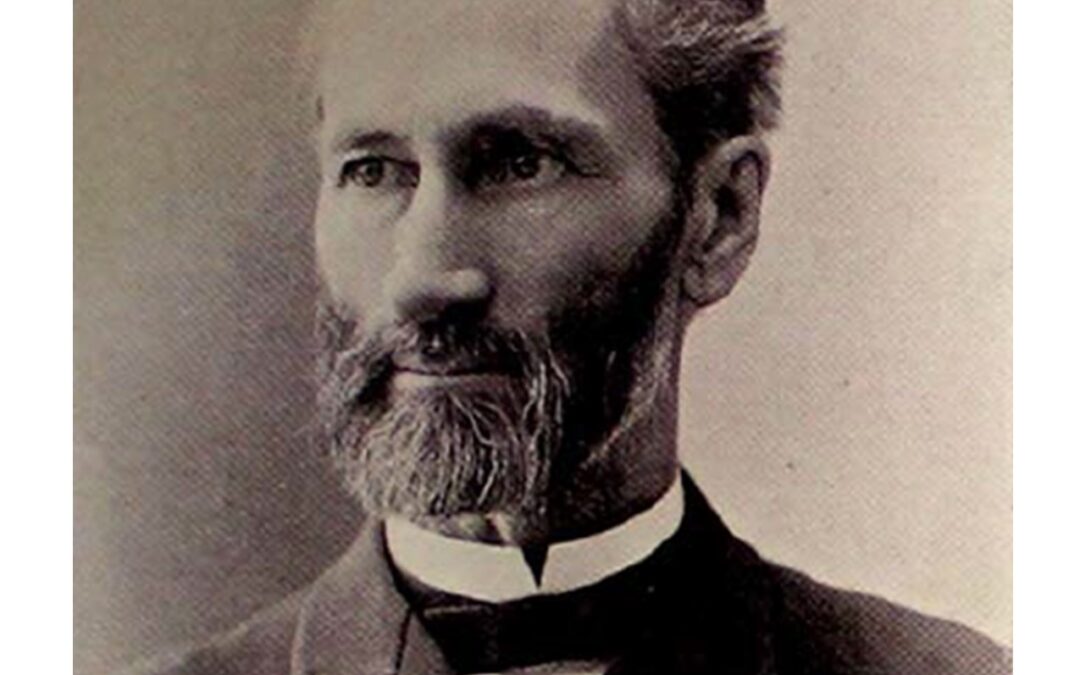
Lyman C. Howe was born in Butternuts, New York in 1832 to Jared and Clarissa Howe. They couldn’t afford a good education for all of their ten children but raised them as strict Calvinists who lived by the Bible. When Lyman was ten, his mother died, and the family was separated. Lyman went to live with Perry Aylsworth for nearly three years before moving in with his brother who lived in Hornell, New York. He attended public school and in 1851 began teaching school until his health failed him.
Beginning in 1853, Lyman trained as a Spiritualist medium and began work as an inspirational speaker. He said many incidents happened to him from 1854 to 1859. In 1858 he was almost forced to be a platform speaker, but he was too shy. The first few years most of his lectures were in rhyme. His first public lecture was in the Free Church at Lama near Fredonia. He did not expect to be successful and traveled from 5-20 miles on foot to appointments, and frequently wasn’t paid.
By the end of 1858, he had regular speaking engagements in several New York towns. In 1862, he married Sarah E. North and they had a daughter, Sarah Maude born in 1867. A year later, they moved to Fredonia, New York. By then Lyman’s inspirational speaking was taking him around the country. He spoke in at least 17 states and cities, including Titusville, PA, Chicago, Kansas City, Binghamton, NY and Elmira NY, Troy, Grand Rapids and New York City, and Washington DC, spending about a year in each. He wrote for many periodicals, including The Sunbeam, Banner of Light and Psychic Review. He also held public debates with Rev. William Rogers of Gowanda, NY, Rev. Niles of Corry, PA and Uriah Clark of Nunda Station, NY.
In Light of Truth, vol. 20, no. 5, 1897 Lyman wrote: “I first realized phenomenal mediumship in 1854. My sight had become subject to unseen influences and would answer questions, oral or mental, while no other part of my body or mind seemed to be afflicted at all. Then followed a series of phases, automatic writing, personating, talking. Immediately after I began to talk it developed rhyme of a very perfect rhythm and meter, some of it arose to the standard of poetry. Then prophesy, and often giving names, dates and personal communications, called tests. Answering mental questions was a very common and successful phase.”
Lymon was one of the first speakers at Alden’s Grove and served for twenty-five years at Lily Dale without missing a season. In Cassadaga its History and Teaching, A.W. McCoy wrote, “His services have been required in all of the largest cities as well as in the smaller towns and villages, at all of which he has drawn large and intelligent audiences. His inspiration is of the highest and purest order.” Lyman died in 1910 at the age of seventy-five after many years of dedicated service.
by | Jul 13, 2023 | Karen's Korner
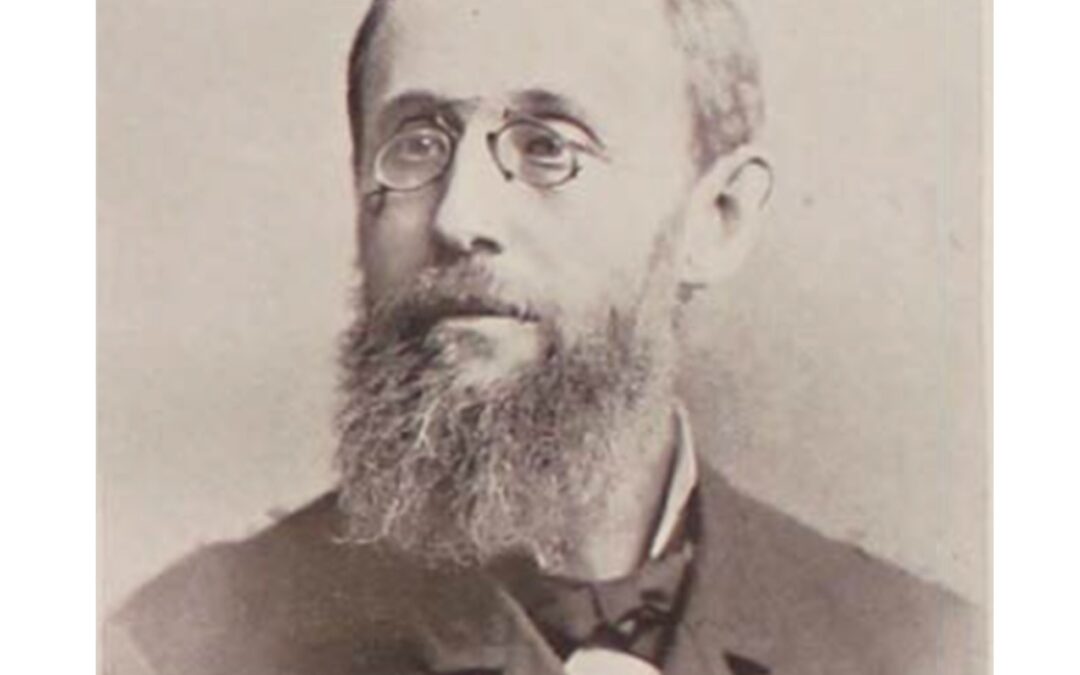
John Reynolds Francis was born to John and Nancy Francis of New Hope, Cayuga County, New York in 1832. His father was a blacksmith and his mother died when he was only six years old. By the age of 17, he was teaching school near his home. Later he tutored the family of a plantation owner in Virginia and then taught in Kansas for a short time. When he was fired from a school for his religious beliefs as a Universalist, he took a position in a printing office. By the end of the year, he oversaw the entire newspaper.
As a newspaper editor he moved to Kansas where he worked for the Olathe Mirror. Because of its anti-slavery policy, ruffians went after him and the newspaper from Missouri. Francis was captured and almost killed by Captain Quantrill’s Raiders before escaping. They destroyed the Mirror office and Francis joined a cavalry company, working for General McKean. After the Civil War he was elected chief clerk of the House of Representatives in the first Kansas Legislature and spent two years as secretary of the Senate.
In 1869 he moved to Chicago to become an editorial writer and then associate editor for the Religio-Philosophical Journal and was eventually fired by Col. Bundy, the editor, because he “always abused the Bible and superlatives.” He married Louisa C. Marriott in 1887 and founded his own paper, The Progressive Thinker, in 1889.
The Progressive Thinker was the pre-eminent Spiritualist journal from the mid-1890s on, acting for a time as the unofficial publication of the National Spiritualists Association. The journal combined traditional reform beliefs with Spiritualism, exposing of fraudulent mediums and taking regular contributions on New Thought and occultism.
Francis was a collector of books, with “books in every room and in every available place.” He was interested in both the material and spiritual worlds. He also followed closely all the scientific discoveries of the time, including radium, electricity and wireless telegraphy. His best-known works were A Search After God and a three-volume set of The Encyclopedia of Death and Life in the Spirit World.
Mrs. Francis, who was also on the staff of The Progressive Thinker wrote in his Memorial in 1910, “For more than a quarter century it was my privilege to give him such humble assistance as I might in this life-work. Together we discussed the many plans that came to his fertile brain, together we wrought for the success of those plans. Now that he has entered upon a wider field of effort, I am grateful that I for so many years was able to lighten his burden; and it is with feelings of heartfelt thankfulness that I am able to record the many kindly tributes of those who loved and labored with him.”
by | Jul 5, 2023 | Blog, Karen's Korner
Margaret Gaule Reidinger (Maggie Gaule)
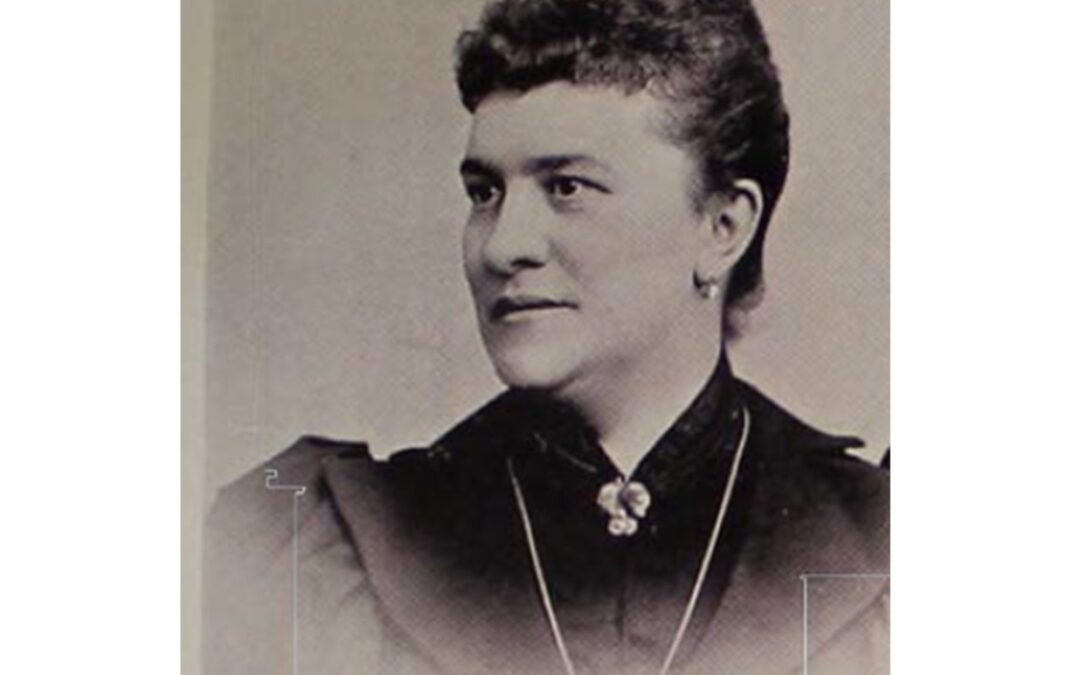
Maggie Gaule was born about 1857 in Baltimore, Maryland to Stephen and Catherine Gaule. Her mother was widowed very early, and Maggie was reared in the Catholic faith and educated in a convent. After graduating from school, she took a position as a saleswoman in a shoe store. The Evening Sun (Baltimore), 13 June 1910, interviewed Spiritualist, Dr. John D. Roberts. He told the paper that while Maggie was working, a man came in to buy shoes for his wife. She wrapped them up and as she handed the shoes to him, she spontaneously said, “You’re going to kill the woman for whom you bought these shoes.” Three days later, he shot his wife.
Afterward, Maggie met Mr. Washington A. Dansking, a prominent medium at the time. Her abilities improved, and she made a business of going to houses and sitting in on family seances. Raps on the tables answered questions addressed to her in sealed envelopes. Washie, a native American, was her spirit guide. Dr. Roberts said, “…she always used her powers to help humanity. No person who was too poor to pay was ever turned away from her door when they came seeking knowledge of their dead. She made money, but she spent it for the relief of others as fast as she made it.” She traveled across the eastern part of the United States, working as a test medium in different cities and Spiritualist camps.
In 1904, Maggie married August T. Reidinger in New York but always known as Maggie Gaule. Dr. Roberts said, “They will tell you that Maggie Gaule was clairaudient, which means simply that she heard clearly the voices of spirits; that she was a ‘mental medium,’ as distinguished from a physical medium.” She was pastor of the First Spiritualist Society and later pastor of the First Ethical Society.
In Glimpses of the Next State (1911), author, Vice-Admiral W. Usborne Moore said, “In a quarter of an hour, Maggie Gaule came in, and, standing by the table, gave an address on the objects of spiritualism and the various faculties of mediums. She denied the power she exercised was that of telepathy. Her friends in that room brought their spirits with them, and it was from these spirits that she obtained the information which she imparted; and more to the same effect.” She said she was correct despite only meeting him for the first time that evening. Moses Hull said she, “…has few peers and no superiors as a test medium….”
Dr. Roberts said, “There was no ‘flying dutchman’ spiritualism about her…. Windows did not open and shut in unaccountable ways. She did not sit in darkness clothed in the gown of a priestess of sombre things. She sat usually in a room filled with light—daylight as frequently as not, and told the person who had consulted her first things about the living then things about the dead.” Many of her messages were given to settle family disputes and advise about business affairs and marriage, as well as find lost or stolen articles. “She seldom went into trances during the last of the thirty years in which she practiced her arts in Baltimore. The trance seances were most frequent when she was giving public seances in a hall on Saratoga street, near Pine.”
Maggie died in June 1910 in New York at the age of 48.