by freshy | Apr 29, 2025 | Karen's Korner
Helen Savage was born in England to Harry M. Savage and Florence (Hudson) Savage in 1899. She was the fifth of six children: Charles, Frances, Florence Madaline, Violet Elsie, Helena Katherine, and Arthur. The family immigrated to the United States in 1900 and settled in Point Loma, California. In 1974, the Eclectic Theosophist referred to Helen as “a third generation Theosophist….” This is probably why the family became part of the Lomaland community.
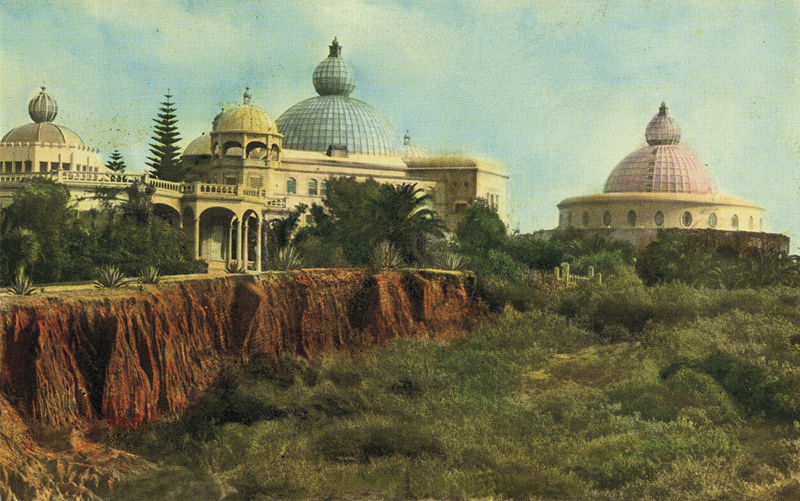
Lomaland was established in 1897. Katherine Tingley bought a piece of land at Point Loma, California. She was joined by Dr. Gottfried de Purucker, and by 1900, the Universal Brotherhood and Theosophical Society (UBTS) established their headquarters there. The group desired to be self-sufficient and developed an agricultural program that raised a variety of fruits and vegetables. Tingley’s goal was to serve produce year-round. The Raja Yoga School also opened the same year. In 1901, an open-air Greek theatre and temple were erected. By 1914, Lomaland had its own college, and by 1919 a theosophical university. Many other buildings were erected on the property including a hotel, a textile factory, a joinery, a bakery, and publishing house. Around 60 percent of the community was female, many holding executive positions. Today, the existing buildings are part of Point Loma Nazarene University.
The Savage family moved to Lomaland just in time for the children to attend Raja Yoga School and Academy. The academy was a boarding school where over 300 students lived in group homes known as Lotus Houses. Children from poor families could also go to school without paying tuition. Along with their studies, the students acted in classical dramas and learned to play at least one instrument. Madaline was six years old when they arrived, and Helen was just a toddler. Charles participated in the theater, in a vocal duet, soon after their arrival.
Unfortunately, their father, Harry Savage died in 1902 at the age of 39. But, by 1910, the family was completely involved with the community. Their mother was employed as a servant, Charles and Frances were teachers. In 1930, four of the children still lived at home. Charles was married and was an assistant secretary for the Theosophical Society. His wife Louise was an accountant. Madaline was an assistant secretary, Elsie a private secretary, and Helen a librarian at the society.
Helen was a librarian at the Theosophical Society until 1932 when she became literary secretary to Dr. G. de Purucker until 1941. In Eclectic Theosophist, no. 24, September 15, 1974, she wrote: “Apart from legend, which usually holds a secret truth, the teaching of the human race is in its essential nature “born from the Sun.” When through long evolutionary cycles of preparation, suitable vehicles were developed, our solar ancestors lit in us the light of mind. Thereafter we became self-conscious, responsible for our own destiny. …The future history of the evolution of the human race will be growing toward this supreme goal. For those who have reached a high stage of development, and are ripe for the supreme testing of initiation, the currents of solar energy, we are told, are running strong.”
Helen and her sister, Elsie, traveled to England with Dr. de Purucker and went on a continental lecture tour from 1932-1933. They spoke at the International Theosophical Headquarters classes in Sanskrit, Astronomy and Public Speaking to a large group of students and gave a public lecture, The Great Rhythm, at Queens Gate in England. Helen “spoke on behalf of those younger members of Point Loma, who have the rare privilege of having lived at Point Loma all our life. To us, as our Leader has so often said, Lomaland is not a place so much as it is an ideal; and it exists wherever there are loyal Theosophical hearts working, as are you, the various presidents of the national Sections and of Lodges, and all the other Comrades here assembled. Lomaland is like a cable with threads interlacing over the world.”
Helen was associate editor of the Theosophical Forum under G. de Purucker, editor, in 1937. She published Psychic Powers, through the Theosophical University Press in 1940. She was single until 1945 when she married Lester Adrian Todd in San Francisco. After a long, fulfilling life, she passed in 1993 in San Diego, California.
by freshy | Nov 18, 2024 | Karen's Korner
Most people who follow Spiritualism are familiar with the Fox sisters who communicated with a spirit in their Hydesville, NY home. The sisters, Margaret and Katie Fox, aged 9 and 11, lived in a cottage about 30 miles from Rochester. The family experienced rapping from within the house and the sisters were able to communicate with a man who said he had been murdered and was buried in the cellar.
Many may not know the connection between the girls and Rochester, NY. Once their story broke, it produced so much excitement in their rural community that the girls were moved for their safety to the home of an older sister, Anna Leah Fish, in Rochester. Leah, as she was known, encouraged her sisters to continue their communications with the spirit world, hosting séances in her home.
Charles Hammond, pastor of the Universalist Society of Rochester, had experiences with them that converted him and his family to Spiritualism. Amy and Isaac Post, Quakers who were involved with the equal rights movements, introduced the girls to their friends. Amy became the Fox sister’s mentor during the early part of their careers, giving them advice, encouragement, and protection. She and Isaac attended their original weekly circle along with R. D. Jones, John E. Robinson and George Willets.
City directories show that Leah lived in two different third ward homes during this period prior to the family’s move to New York City. In 1849, she is listed as a Music Teacher living at 31 Troup Street. By 1851, Mrs. Anna L. Fish was now a “mysterious knocker” who lived at 59 South Sophia Street, today known as Plymouth Avenue.
On 14 November 1849, a public meeting was held in Corinthian Hall in Rochester and the sisters were tested the next day and determined not to be frauds. Rev. A. H. Jervis had his own home circle with his family and other mediums and supported the Fox family against slanderous statements. The circle met for many years.
In 1867, there was a Progressive Spiritualists Church meeting at Schlitzers Hall. The following year, a National Convention of Spiritualists meeting was held in Rochester. The Rochester Daily Union and Advertiser, August 26, 1868 covered the convention that lasted for four days. “There is quite a large attendance upon this convention now sitting at Corinthian Hall. Sixteen States have representatives here, and there is considerable talent in the gathering, and a few men and women of note in spiritual circles.”
No church was listed in the Rochester city directories from 1867 until 1896 when the First Spiritualist Church at 55 Comfort Street was founded, president Arthur K. Sisson, secretary Mrs. George Bailey, and treasurer W. E. Post. In 1989, the New York state convention of Spiritualists was held at Fitzburg Hall, hosted by Rev. G. W. Kates and Rev. Mrs. Zalda B. Kates.
In 1854, after the Foxes had moved away, the Plymouth Congregational Church was built across the street from their last address. By 1904, financial troubles overwhelmed the Congregational Church. The pastor left and congregation disbanded. It became the Rochester Meggiddo Mission until the New York Home Missionary Society sold the building to the First Spiritualist Church of Rochester in 1906.
B. F. Austin was the pastor at the time the church was bought. He gave sermons on topics such as, “Wit and Humor,” “How I know the Dead Return,” and “The Kind of Religion Needed.” The church became the site of New York state’s annual Spiritualists convention. In the 8 Jun 1907 issue of the Democrat and Chronicle, the paper wrote, “The church was crowded, those in attendance including beside the delegates and visitors to the convention and members of the Spiritualist Church in Rochester, many who came out of curiosity intent simply on seeing what would be done in spiritualistic seances or demonstration.”
The church attracted speakers from across the United States and even Canada, hosting D. D. Rees of Montreal in 1910. During June of 1911, they put on the fifteenth annual convention of the New York state association. One of the mediums, Miss Flo Cotrell of Hamburg, known as a rapping medium, gave a demonstration. President H. W. Richardson presided at the morning session and Mrs. Lewis Kurtz of Rochester was a prominent worker at the lyceum.
By 1912, the church had over 200 members enrolled to celebrate the 6th anniversary of their owning the building. Pastor Dr. B. F. Austin soon moved to Los Angeles to minister to The People’s Church, but that did not deter the parishioners. They welcomed inspirational speakers under the leadership of Rev D. A. Herrick and in 1913 hosted the meeting Board of Trustees of the New York State Association of Spiritualists. They also developed a Children’s Progressive Lyceum. In December of 1913, the First Spiritualist Church legally changed its name to Plymouth Spiritualist Church.
Over the next decade, the church hosted the General Assembly of Spiritualists of New York State conventions and in 1917 welcomed Mrs. Margaret H. Fulton, president of the Colored Spiritualists Society, at a time when segregation was the norm. Mrs. Ada Ambler and Rev. W. J. Elwood were pastors during the 1920s.
The first hint that a memorial monument would be erected came out of Paris on September 11, 1925. The Democrat and Chronicle wrote, “The Internationalist Congress today accepted the plan of Mrs. M. D. Cadwallader, of Chicago, to erect a monument at Rochester, N. Y. to the Fox Sisters, founders of spiritualism…. Mrs. Cadwallader reported that $2,500 and a site worth $20,000 already had been contributed for this purpose….” The proposed site was on the Troup Street side of the Plymouth Spiritual Church and the “congress plans to raise a memorial fund of about $25,000.” In June of 1926, Sir Arthur Conan Doyle contributed $5,000 to the project. Plans for an obelisk were designed by attorney William H. Burr. The final monument was twenty-five feet high and dedicated on December 4, 1927.
The church hosted the 1930 general assembly meeting which included members of three Rochester churches. Although the church was busy featuring guest mediums and holding symposiums over the next decade, there were many pastors, including: Justine Titus, Raymond Burns, and Robert J. MacDonald.
Justin E. Titus returned in 1947 after traveling the states as a lecturer and author and acting as pastor of World Temple of Light in Hollywood and vice president of Camp Etna in Maine. In 1948 the church celebrated the 100th anniversary of Spiritualism, but the turnover in pastors continued. Rev Titus was followed by Rev. F. B. Mantle and Rev. Helen Graham.
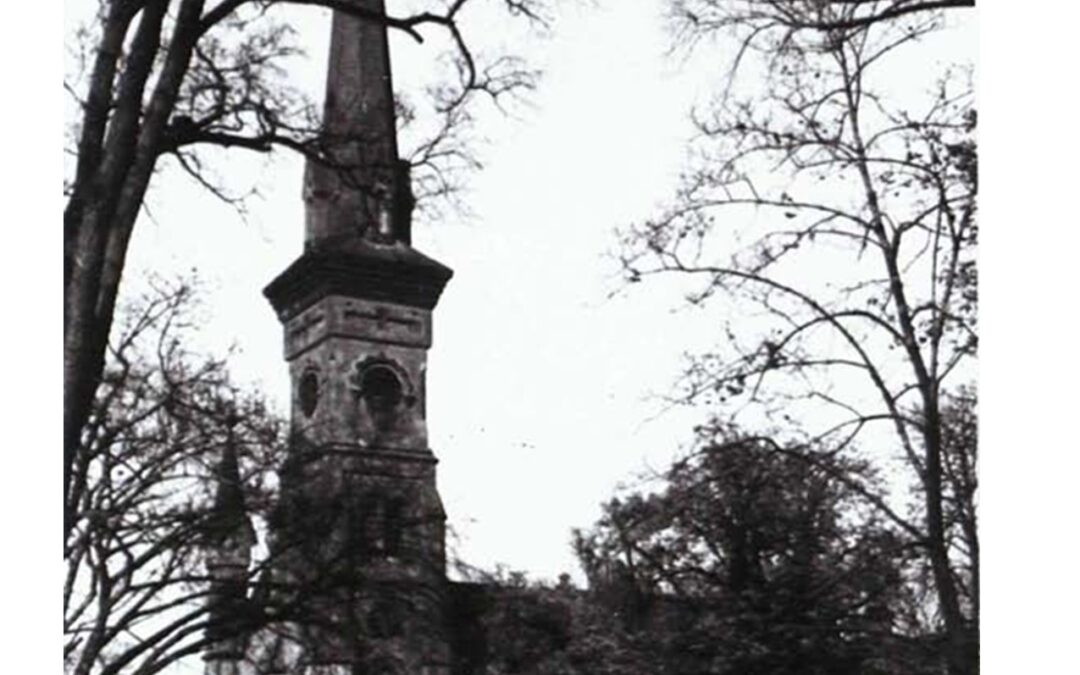
On Jul 12, 1953, the Democrat and Chronicle of Rochester ran the following headline: “Famed Plymouth Church to Be Razed for Loop.” Plymouth Spiritualist Church stood in the path of the eastbound lane of the proposed 490 Expressway. In the article they wrote, “During its 50 years, Plymouth church harbored heretics, liberals and radicals—many of them courageous thinkers who needled desultory citizens into action against social ills.” They continued, “Today the membership of the church has dwindled, the result, according to President Lewis M. Caves, of a series of pastors ‘who didn’t set too well.’ Now the historic building is doomed to fall before the wrecker’s cranes. The group and its new pastor, the Rev. Mrs. Helen Graham, are thinking about finding a new church, a saddening chore.”
Two years after the church was razed, a moving company placed rollers under the 14-ton monument and carefully moved it fifty feet south to get it away from the construction. In the 1960s and 70s the church purchased and remained at 889 Plymouth Ave, with pastors including: Rev. Margaret Wamsley, Rev. Eleanor Gutzmer, and Rev. Harry Bender.
With only 30-40 church members remaining, in 1980 they sold their building and made their new home in the basement of law offices at 55 Troupe Street. Over the next two decades, they were located on Carter Street and led by pastors, Rev. Ronald Skowronski and Rev. Anne Lazerson.
In 2003, they moved to their current building on Vick Park A (in between Park Ave and East Ave). Under the leadership of Robin Higgins, their membership increased from 20-60 in three years. Today they are continuing to grow in their new home.
Photo was taken c. 1950 From the Collection of the Rochester Public Library Local History Division.
by freshy | Nov 4, 2024 | Karen's Korner
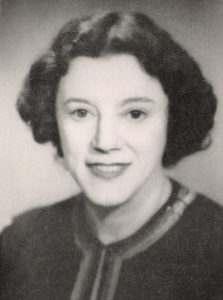
Little is known about direct voice medium Sophia Williams. She was originally from Chicago. In her book, You Are Psychic (1946), she wrote: “I began as a sceptic. I desired to either disprove psychic claims or to develop the faculties which produce this natural phenomenon. I watched and analyzed every step of the way over a period of years. Thus, I arrived at certain concrete conclusions concerning what takes place in the mental and physical spheres during psychic manifestations.”
Hannibal Hamlin Garland was born on a farm near West Salem, Wisconsin in 1860. He lived on various Midwestern farms, finally settling in Boston in 1884 to pursue a career in writing. He was a well-known American novelist, poet, psychical researcher, essayist, and short story writer. In 1891, he published Main-Traveled Roads, a collection of short stories inspired by his days on the farm. His books included The Trail of the Gold Seekers (1899), his autobiography, A Son of the Middle Border (1917), and A Daughter of the Middle Border which won the 1922 Pulitzer Prize for Biography.
Garland moved to Hollywood, California in 1929, where he devoted his time to investigating psychic phenomena. His association with Sophia Williams began in 1937. He received a letter from Dr. Nora Rager of Chicago suggesting he meet the “remarkable psychic” who produced independent voices in well-lighted rooms.
During their first sitting, Garland was impressed when Williams connected with his old friend, Henry Fuller, and brother-in-law, Lorado, spoke through her with the aid of a trumpet. Garland tested Williams by creating a transmitting box, so that the medium was two rooms away from Garland and couldn’t see what he was pointing to when questions were asked. He was so impressed with her abilities that he asked her to help him with another project.
Two years earlier, Garland had been contacted by Gregory Parent. Gregory and his wife Violet had been instructed by spirits to locate 1,500 buried crosses and artifacts that were from the missionary period in California. Violet had died, and Gregory thought Garland might be interested in finding other crosses that were reported to exist. Using Williams ability to contact the spirit world, they were guided to sixteen additional artifacts located in ten widely separated areas. In his final book, The Mystery of the Buried Crosses (1939), he described the search for the artifacts and defended psychic phenomena.
Garland died at age 79, at his home in Hollywood in 1940. The Hamlin Garland House in West Salem is a historical site today.
Additional reading:
Garland, Hamlin (1939). The Mystery of the Buried Crosses, E. P. Dutton and Company, NY.
Williams, Sophia (1946) You Are Psychic. Press of Murray & Gee, Hollywood
http://www.iapsop.com/ssoc/1946__williams___you_are_psychic.pdf
http://en.wikipedia.org/wiki/Hamlin_Garland
https://psi-encyclopedia.spr.ac.uk/articles/buried-crosses http://whitecrowbooks.com/michaeltymn/entry/the_mystery_of_the_buried_crosses/
by freshy | Sep 3, 2024 | Karen's Korner
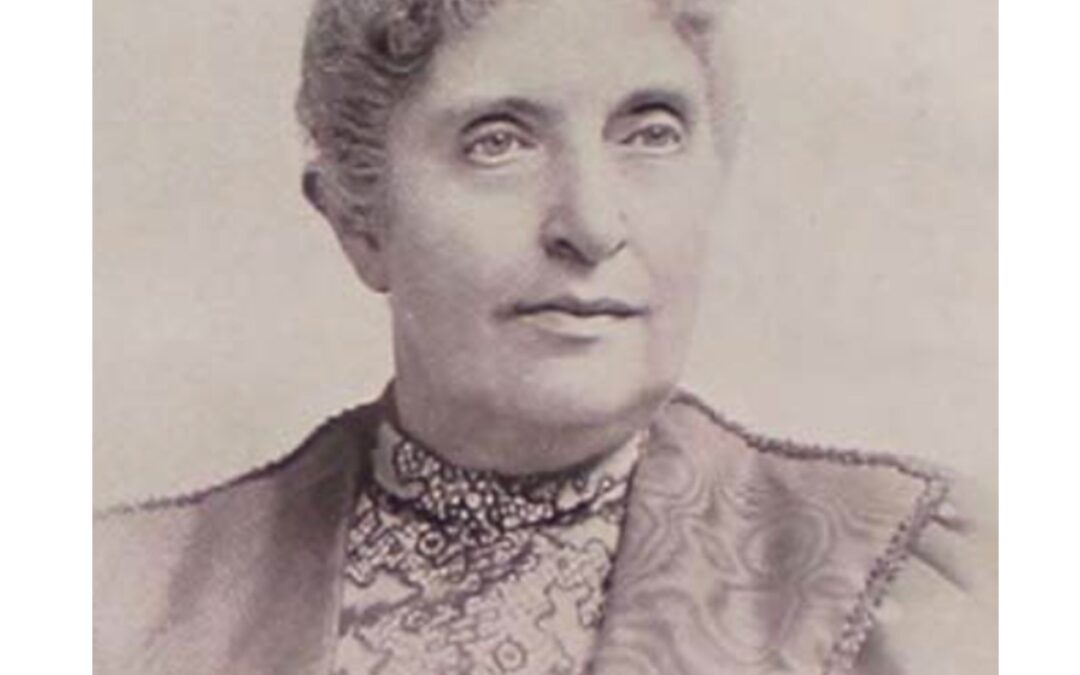
Juliette Hills was born in 1831 in Leominster, Massachusetts to Emerson and Susannah Hills. She married Asher A. D. Yeaw in 1853 and they had three children: William, Arthur and Catherine. Juliette’s speaking engagements began when her children were very young. Beginning in 1867, she was listed in the Banner of Light as a Spiritualist lecturer living in Northborough, Massachusetts. She spoke throughout the state and in Rhode Island for the next decade. Asher became employed in a comb shop around 1880 and they moved to Worchester, Massachusetts.
By 1879, Juliette was listed as a speaker at the Lake Pleasant camp meeting. She would continue lecturer for many camp meetings including Ocean Grove, Harwich Port, Sunapee Lake and Queen City Park during the 1880s. At the Mediums’ Camp-meeting of the Two Worlds, Spirit Voices, July 1885 wrote, “Mrs. Juliette Yeaw in the afternoon held a large audience spell-bound with the eloquence of the old veteran spirit-friend A.T. Foss, that controlled her. Her subject was, ‘Is Spiritualism True?’ and a finer discourse never came from mortal lips.” The Golden Gate, 17 November 1888, wrote about her lectures at Queen City Park. “Mrs. Yeaw is a lady possessed of superior natural talent, highly intuitive and inspirational, and carries with her that charm of perfect loveliness only presented by those who lead the higher life.”
In1894, Juliette was ordained and installed as pastor of the Independent Liberal Church at Greenwich. In 1899, she was a speaker at the Massachusetts State Association of Spiritualists 51st anniversary celebration. She was also a member of the Women’s Suffrage league, elected president in 1902.
The Banner of Light, 6 January 1906, asked people to write their plans for the New Year. Juliette wrote: “The gulf between the things which I would like to do in the New Year and the things I can do, does not prevent my bridging the chasm with good intentions, which admit of my saying, I would like to open the doors of Waverly House and see it fully equipped for the noble service for which it was designed.” She wanted to make sure that those who wanted to read spiritualistic papers could get them. She also wanted to help the Morris Pratt Institute, encourage struggling mediums, offer greater comfort to the bereaved, and make the New Year the best of her life.
In 1910, Asher was 81 and Juliette was 78. They were living at home with their daughter and one son. Juliette died in 1915 from heart disease at the age of 84. Asher survived her.